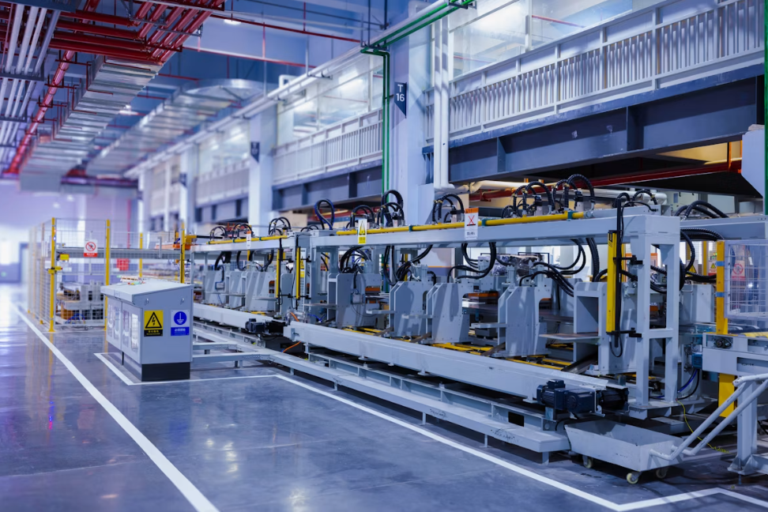
The medical device industry operates under some of the strictest manufacturing standards in the world. Every component, assembly and finished product must meet rigorous quality expectations because patient safety depends on it. At the same time, manufacturers face increasing pressure to improve production speed, reduce errors and maintain cost efficiency.
Which is why medical device automation has become indispensable.
Why Automation is Critical in Medical Device Production
Automation helps manufacturers produce highly precise devices with greater consistency while meeting demanding regulatory requirements. From robotic assembly to inspection and testing equipment, modern automation is reshaping how medical devices are made.
For companies producing surgical instruments, diagnostic equipment, implantable devices and disposable products, it’s becoming a necessary part of maintaining quality and staying competitive.
Medical device manufacturing leaves little room for variation. A small defect, an incorrect assembly or a missed inspection can have serious consequences for patients and manufacturers alike.
Manual processes often struggle to deliver the consistency that today’s complex devices demand. Fatigue, handling inconsistencies and human error introduce variability that controlled, automated production environments largely eliminate.
Where Automation Makes a Difference
- Precision assembly
- Product consistency
- Traceability
- Inspection accuracy
- Throughput efficiency
- Regulatory compliance
Automated systems also reduce unnecessary human contact with sensitive components, an important factor in cleanroom environments where sterility and contamination control are essential.
Data collection is another significant advantage. Automated systems track production metrics, inspection results and testing outcomes in real time, creating detailed documentation that supports validation requirements and simplifies audits.
As medical devices grow smaller and more complex, automation gives manufacturers the precision and repeatability needed to maintain high standards at scale.
Robotic Assembly for High-Precision Devices
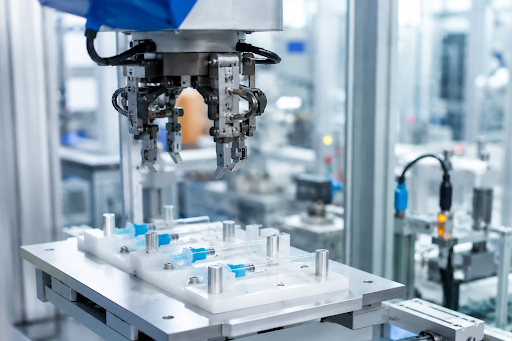
Many medical devices contain extremely small, delicate or intricate components that require precise assembly and tolerances that manual methods often can’t reliably achieve at scale.
Common Robotic Assembly Applications
- Catheters
- Surgical instruments
- Wearable medical devices
- Diagnostic cartridges
- Implantable components
- Micro-electronic medical assemblies
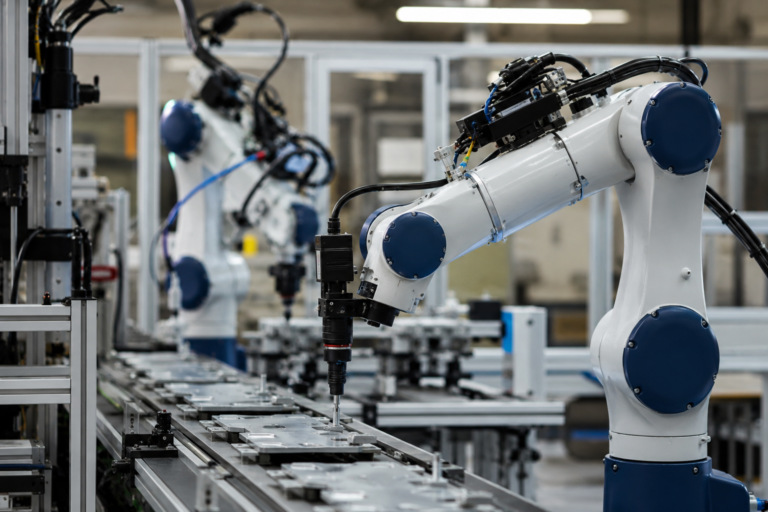
Robots perform these operations with exceptional consistency, maintaining tight tolerances across long production runs. Rather than replacing entire lines for new products, manufacturers can often reprogram robotic cells to support design changes or new configurations. This is a meaningful advantage in an industry where product development moves quickly.
Robotic systems handle tasks ranging from component placement and adhesive dispensing to laser welding, screwdriving and precision fastening, as well as packaging and labeling at the end of the line.
Collaborative robots — cobots — are also becoming more common in medical manufacturing. These systems work safely alongside human operators, combining the efficiency of automation with human oversight where it’s still needed.
For high-volume production of precision devices, robotic assembly reduces cycle times while improving quality and consistency across every run.
Vision Inspection for Regulatory Compliance
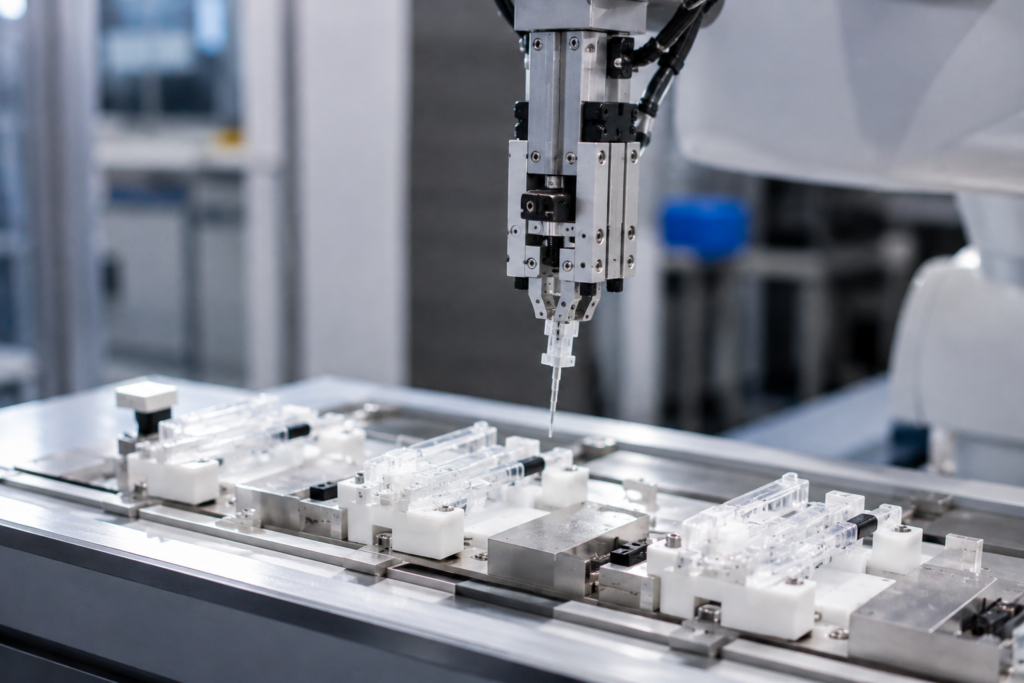
Manual inspection is time-consuming and inconsistent. In medical device manufacturing, inconsistency has consequences. Automated vision systems use cameras, sensors and advanced software to evaluate products at high speed with a level of accuracy that manual processes can’t reliably match.
What Vision Systems Can Inspect
- Dimensions and tolerances
- Surface defects
- Component alignment
- Label placement
- Barcode readability
- Packaging integrity
- Color consistency
- Missing or damaged components
These systems can capture and analyze thousands of images during production, identifying defects that may be difficult for human inspectors to detect consistently.
Medical device automation using machine vision also improves traceability. Inspection data can be stored automatically and linked to individual production batches or serialized products. This documentation supports FDA compliance and quality management requirements.
Another important benefit is real-time quality feedback. Automated inspection systems can immediately identify trends or recurring issues, allowing manufacturers to correct problems before large quantities of defective products are produced.
By integrating vision inspection directly into production lines, manufacturers can improve first-pass yield, reduce scrap and maintain tighter quality control throughout the manufacturing process.
Automated Test Stands for Repeatability and Safety
Testing is essential for ensuring medical devices perform safely and reliably under real-world conditions. Automated test stands help manufacturers validate product functionality with greater consistency and repeatability than manual testing methods.
Common Testing Applications
- Electrical performance
- Pressure resistance
- Flow rates
- Leak detection
- Mechanical movement
- Sensor accuracy
- Device calibration
- Durability and cycle life
The value of automation here goes beyond consistency. Take pressure testing, for example. An automated test stand applies exact pressure levels, monitors responses in real time and records results automatically, instantly flagging or rejecting any device that falls outside acceptable parameters.
Automation also improves operator safety in testing environments involving electrical systems, pressurized components or repetitive testing procedures.
Another advantage is production efficiency. Automated testing systems can complete inspections faster while maintaining highly accurate results. Integrated data logging handles quality reporting and traceability automatically. And as devices become more electronically complex, automated test stands scale with that complexity in a way manual testing simply can’t.
Planning for Scalable and Efficient Production
Medical manufacturers often face fluctuating demand, evolving regulations and ongoing product innovation. Automation systems must support not only current production needs but also future scalability.
Key Planning Considerations
- Production volume goals
- Product complexity
- Regulatory requirements
- Facility constraints
- Cleanroom considerations
- Future expansion plans
- Data collection needs
- Integration with existing equipment
Scalable automation solutions allow manufacturers to increase production capacity without sacrificing quality or consistency. Modular systems can often be expanded over time as demand grows, helping companies manage investment costs while maintaining operational flexibility.
That’s why partnering with an experienced automation integrator is worth the investment early in the process. A knowledgeable automation provider can design systems specifically tailored to the unique requirements of medical device manufacturing, including compliance, validation and traceability needs.
Custom automation solutions may combine robotics, vision inspection, testing systems and material handling into a fully integrated production line. Proper integration helps manufacturers maximize uptime, reduce bottlenecks and improve overall equipment effectiveness.
In addition to production efficiency, well-designed automation systems can support long-term business growth by improving responsiveness to market changes and reducing dependency on labor-intensive processes.
The Future of Precision Manufacturing
Precision, consistency and compliance aren’t competitive advantages in medical device manufacturing; they’re the baseline. Automation is how manufacturers meet that baseline reliably, at scale and across increasingly complex product lines.
From robotic assembly and vision inspection to automated testing and fully integrated production systems, the right automation strategy gives manufacturers the reliability and flexibility to compete in a highly regulated industry.
Farris Automation designs and builds custom automation systems that help manufacturers improve production accuracy, increase throughput and maintain strict quality standards. Whether you’re planning a new project or upgrading an existing line, our team develops solutions tailored to your specific manufacturing goals.