Manufacturing today runs on one relentless pressure: do more with less. Automated systems promise exactly that: higher output, lower labor costs and leaner operations. But there’s an irony built into the process: a poorly managed installation can disrupt the very efficiency it’s meant to create, cutting into both productivity and product quality.
Getting it right requires careful planning before a single machine is installed. The following steps make that possible.
Pre-Installation Planning
Nothing comes to fruition without a proper plan, and automation is no different. A successful automation process starts well before the equipment arrives on site. Careful planning is essential to avoid costly delays and ensure as smooth a transition as possible. Begin by thoroughly assessing your current production line to understand workflows, identify repetitive or labor-heavy tasks, and determine which steps will benefit most from automation. Whether you choose fixed, flexible or hybrid automation, the approach should match your production goals.
Start with a deep understanding of what you have. Mapping out the entire assembly process reveals bottlenecks and opportunities for improvement. Every step matters here — from raw materials through to final inspection — and all of it needs to be accounted for.
Involving employees early is equally important. Discuss how automation will change their roles and introduce concepts like collaborative robots (cobots) to ease concerns about job loss. Showing that automation supports human workers rather than replacing them builds the kind of buy-in that’s vital for success.
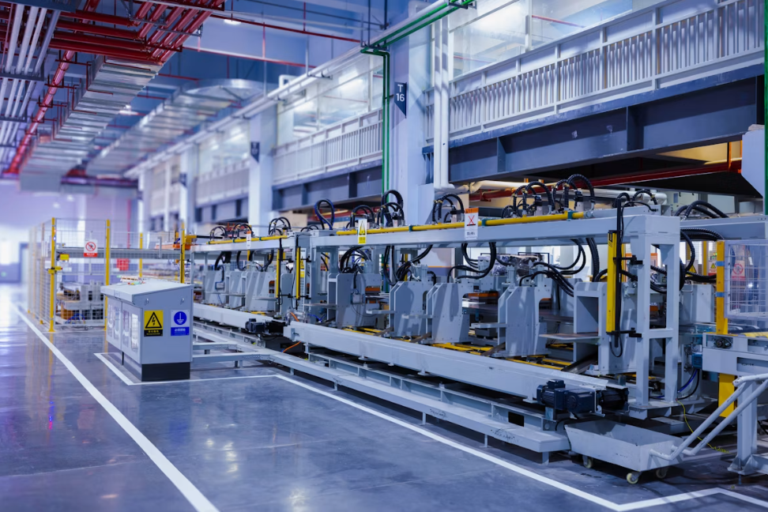
Equipment selection is just as critical. Industrial robots, automated guided vehicles (AGVs) and conveyor belts form the backbone of any automated line, and choosing systems that integrate well with your existing infrastructure reduces compatibility issues and speeds up installation.
Building in capabilities like predictive maintenance and real-time monitoring from the start pays off down the line, keeping unexpected downtime to a minimum once the system is up and running.
Phased Integration Strategies

Rolling out automation all at once can be disruptive and risky. A phased approach allows you to introduce automation gradually while keeping parts of the line running. This method helps maintain production flow and limits downtime.
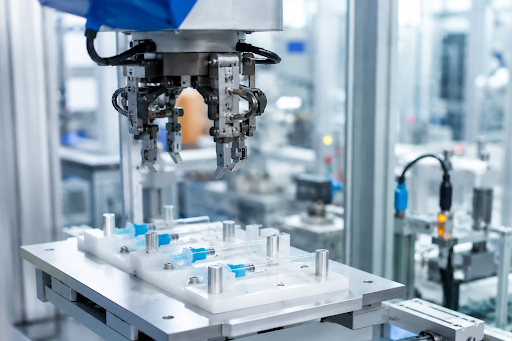
Start by automating the most repetitive or error-prone tasks, such as manual loading or material handling. This lets you test and refine automation in small steps before expanding it. For example, automotive plants might begin automating welding or painting with robots, while electronics manufacturers could start with precise assembly tasks using vision systems and robots.
Phased integration also works well for operations that run varied product lines or switch models often, since flexible automation can be scaled to match shifting batch sizes and volumes. Gradually introducing automation gives your workforce time to adjust and helps maintain product quality throughout the transition.
The result is a transition that keeps production moving without sacrificing the gains that automation is meant to deliver.
Employee Training and Change Management
Installing automation isn’t just about new machines; it’s about the people already on your floor. Even the most sophisticated equipment falls short without a workforce that understands how to use it. Training employees on best practices is essential for both day-to-day efficiency and long-term success.
That training should cover control systems, robotic automation and any machine learning tools involved in production. Hands-on sessions with cobots and AGVs reduce resistance and sharpen safety awareness.
Clear communication matters too. Keeping staff informed about how automation reduces repetitive work and improves safety builds a positive mindset around the transition. Addressing job security concerns openly, while highlighting new opportunities in areas such as data analysis and predictive maintenance, boosts morale and cooperation.
Bringing employees into the process early and supporting them throughout gives them a stake in the outcome and reduces unwanted downtime. When managed well, automation doesn’t replace what made your operation successful; it builds on it.
Post-Installation Monitoring and Optimization
Installing the automated line is just the beginning. Keeping downtime low and getting the most from your investment requires continuous monitoring and a willingness to keep refining the system
Sensors and machine vision systems catch defects early, maintaining the quality standards your industry demands. Predictive maintenance, powered by machine learning, forecasts equipment problems before they occur, so repairs can be scheduled around planned downtime rather than forced stops.
Regular reviews of system efficiency, cycle times and output reveal where the line is performing and where it isn’t. Over time, this drives higher throughput and lower unit costs.
These strategies keep production lines running smoothly and give manufacturers the flexibility to adapt as demands shift. Staying on top of your data keeps your operation current and positioned for long-term growth.
Automation Done Right Starts Here
Minimizing downtime during installation comes down to four things: careful planning, phased implementation, thorough training and consistent monitoring. Address each one and the shift to an automated line becomes a true upgrade in efficiency, quality and safety — not a disruption.
If you’re ready to make that move, Farris Automation can help. Contact us today to speak with an expert about solutions built around your operation.