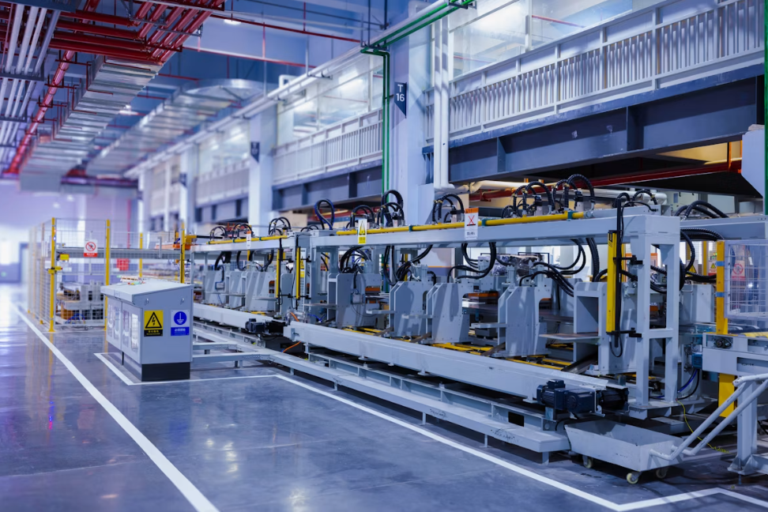
Quality control (QC) has evolved far beyond manual inspection and sampling. Today’s manufacturing environments demand speed, precision and consistency, especially as part complexity increases and zero-defect expectations become the norm.
Modern QC automation tools help manufacturers detect defects earlier, reduce waste and maintain consistent product quality without slowing down production. From vision systems to robotic test rigs and advanced analytics software, these technologies help engineers reduce rework costs, minimize scrap and hit tighter quality targets without sacrificing cycle time.
Vision Inspection Systems
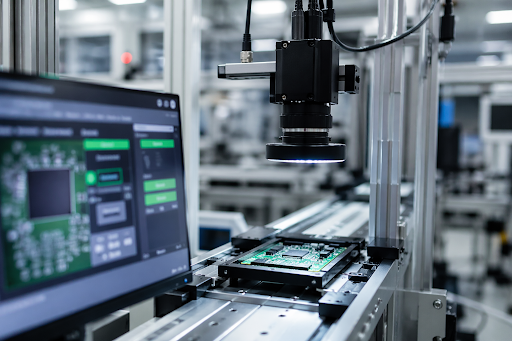
Vision inspection systems are one of the most widely adopted QC automation tools in modern manufacturing. These systems use high-resolution cameras, sensors and AI-powered image processing to automatically detect defects that are difficult or impossible for the human eye to catch.
As highlighted in industrial applications, vision systems can identify surface defects, verify dimensions and confirm assembly accuracy in real time without interrupting the production flow.
These systems are especially valuable for:
- High-speed production lines
- Electronics and PCB manufacturing
- Automotive components
- Packaging and labeling verification
Advanced vision systems go beyond simple detection. With AI integration, they continuously improve accuracy by learning from new defect data, making them a cornerstone of modern QC automation strategies.
Robotic Test Stands
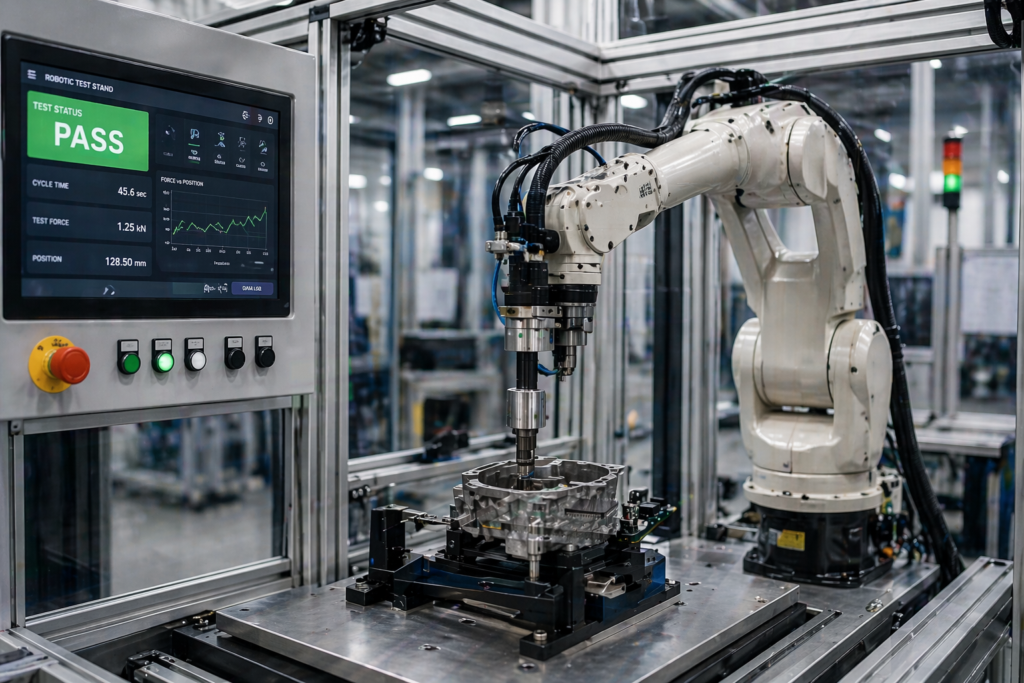
Robotic test stands are automated setups designed to physically test product performance under controlled conditions. Unlike static manual testing, these systems use robotic arms and programmable motion control to perform repeatable and highly precise tests.
In QC automation environments, robotic test stands are often used for:
- Load and stress testing
- Functional validation of mechanical assemblies
- End-of-line testing for complex products
- Repetitive durability testing cycles
Their biggest advantage is consistency. Every product is tested in the same way, eliminating human variability and improving traceability across production batches.
For manufacturing engineers, robotic test stands also provide flexibility as test sequences can be quickly reprogrammed as product designs evolve.
Automated Measurement and Testing Devices
Automated measurement tools focus on precision dimensional inspection and performance verification. These include laser measurement systems, coordinate measuring machines (CMMs) and sensor-based gauges integrated directly into production lines.
Modern QC automation systems combine these tools with robotics and inline inspection systems to ensure real-time measurement instead of post-production sampling.
Key capabilities include:
- Micron-level dimensional accuracy
- Non-contact measurement of sensitive parts
- Inline inspection during manufacturing
- Real-time pass/fail decision making
By integrating measurement tools into automation workflows, manufacturers reduce bottlenecks and ensure that defects are caught immediately rather than at the end of production.
Software Tools for Quality Analytics
Hardware alone isn’t enough for effective QC automation. Software platforms are what turn raw inspection data into actionable insights.
Modern quality analytics software consolidates data from vision systems, sensors and test equipment to provide:
- Real-time dashboards for production quality
- Trend analysis and defect tracking
- Root cause analysis for recurring issues
- Predictive quality insights using AI models
These tools are increasingly powered by machine learning, allowing systems to detect patterns that would be invisible to traditional QC methods. In many factories, QC software is now the central hub connecting all inspection devices into a unified quality ecosystem.
For manufacturing engineers, this means fewer blind spots and better decision-making across the entire production process.
Best Practices for Selecting QC Tools
Choosing the right QC automation tools is just as important as implementing them. The wrong setup can lead to inefficiencies, integration issues or unnecessary costs.
Here are the best practices engineers should follow:
1. Match tools to production speed and complexity
High-speed lines require inline vision systems and automated measurement tools, while low-volume, high-precision production may benefit more from robotic test stands.
2. Prioritize integration capability
Ensure QC tools can integrate with existing MES, ERP or SCADA systems. Poor integration leads to data silos and lost efficiency.
3. Focus on scalability
Choose systems that can grow with production demands, especially as product lines expand or change.
4. Evaluate data usability
A QC system is only as good as its data output. Look for tools that provide clear, actionable insights, not just raw numbers.
5. Consider maintenance and support
Downtime in QC systems can halt production. Reliable vendor support and easy maintenance are critical.

The Future of Quality Control Is Already Here — Is Your Line Ready?
Defects don’t wait, and neither do your competitors. QC automation has moved from a nice-to-have to a hard requirement for manufacturers serious about staying competitive.
The manufacturers pulling ahead aren’t waiting for the perfect moment. They’re acting now by cutting defect rates, tightening cycle times and making decisions backed by real data.
Ready to stop leaving quality to chance? Farris Automation works with manufacturers to design and deploy custom automation solutions built around your line, your tolerances and your goals.
Talk to our team today and find out what a smarter QC setup could mean for your production floor.